Waste Minimisation
At Železiarne Podbrezová, we valorise by-products of steel production and transform them into environmentally friendly materials with practical applications in other industrial sectors. In line with the principles of the circular economy and the European Green Deal, we process not only slag but also refractory materials generated during the production process.
Recycling of Refractory Materials
Ceramic linings and refractory materials used in our furnaces do not end up as waste. In cooperation with our subsidiary Žiaromat, we recycle these materials and reuse them in the production of new refractory products. In this way, we close the material loop, saving primary raw materials and energy while extending the life cycle of used materials. This represents a concrete example of responsible industry in practice, with a direct impact on reducing the environmental footprint.
Artificial Aggregate – an Eco-Friendly Alternative to Natural Aggregate
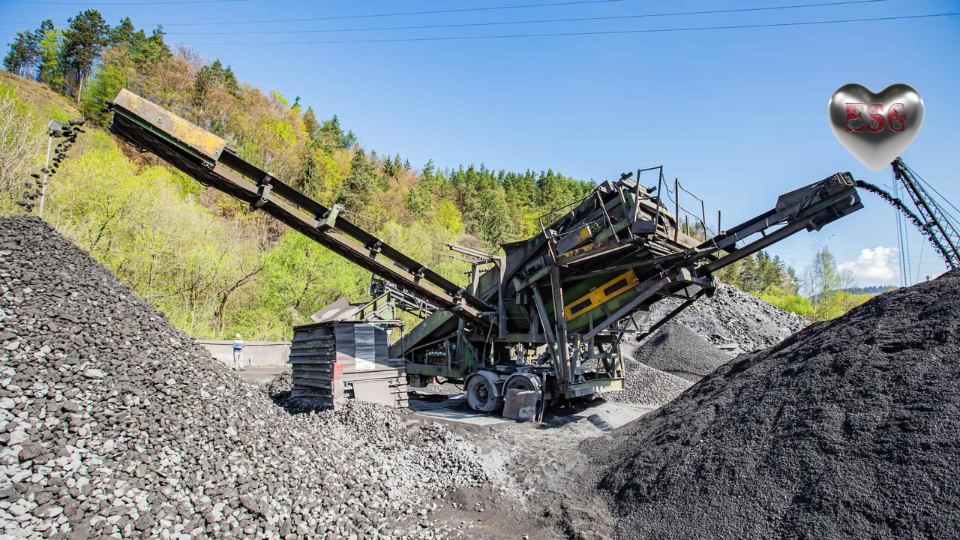
Another by-product that finds a second life in our operations is steelmaking slag. Through its processing, artificial aggregate is produced – a fully functional and certified alternative to natural aggregate for the construction industry. Processed and graded artificial aggregate meets all technical standards and is certified for use in both civil and transport construction, for example in road building, backfilling, embankments, and terrain modifications. The entire production process takes place directly within the Železiarne Podbrezová premises and includes crushing, grading, and quality control.
Slag from two technological processes:
from the electric arc furnace,
and from the ladle furnace.
Four fractions of artificial aggregate suitable for various applications:
road construction, backfills and embankments, terrain shaping and base layers.
100% recycled material, certified according to EN 13242, locally available and logistically efficient.
Slag Processing and Aggregate Production
Production and Recycling of Refractory Materials
Through these activities, we contribute to reducing the carbon footprint while ensuring local availability of materials. By carefully processing these secondary raw materials, we fulfil our commitment to the European Green Deal and actively contribute to a low-carbon future. Both activities are fully aligned with the principles of the circular economy (CE) as defined by the EU Taxonomy and represent a tangible contribution to a sustainable, low-carbon future.